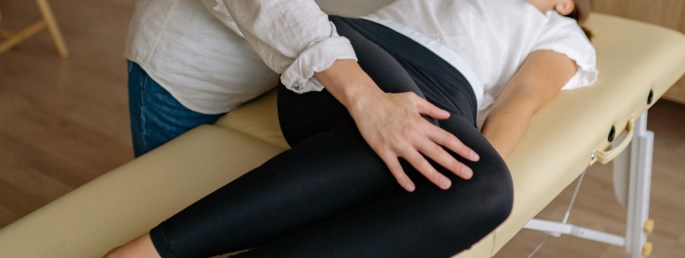
PNF Stretching in Remedial Massage: An Advanced Stretching Technique with Therapeutic Benefits 

If you’ve ever felt restricted by tight muscles, reduced flexibility, or lingering tension—especially in your hips or lower back—PNF stretching might be the missing link in your recovery and mobility journey. At Transcend Health and Well-Being, we use this advanced stretching technique to support deeper muscular release, improved range of motion, and long-lasting results when combined with remedial massage. Commonly used by physical therapists and athletes, it’s a valuable tool in treating pain, improving flexibility, and supporting injury recovery.

What is PNF Stretching?

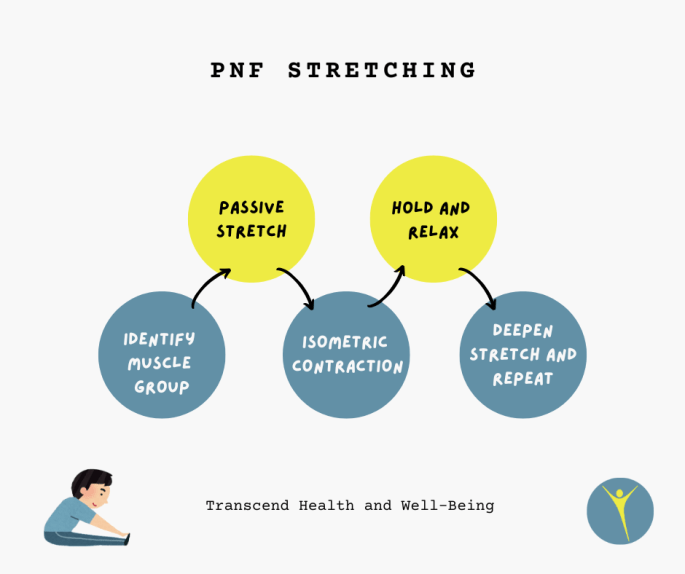
PNF stretching, short for Proprioceptive Neuromuscular Facilitation, is a stretching technique that improves flexibility by combining gentle stretching with muscle activation. It involves alternating between holding a stretch and contracting the muscle, which helps the body relax and lengthen the targeted muscle.

A PNF stretching session will typically begin with a passive stretch of the targeted muscle, gently stretching the muscle to its maximum ability. This passive stretch will be followed by an isometric contraction—the muscle will remain in its passive stretch and be contracted against resistance. The muscle is then relaxed again, and the stretch is deepened. This process is typically repeated multiple times for maximum effect. 

Why use PNF stretching in remedial massage?

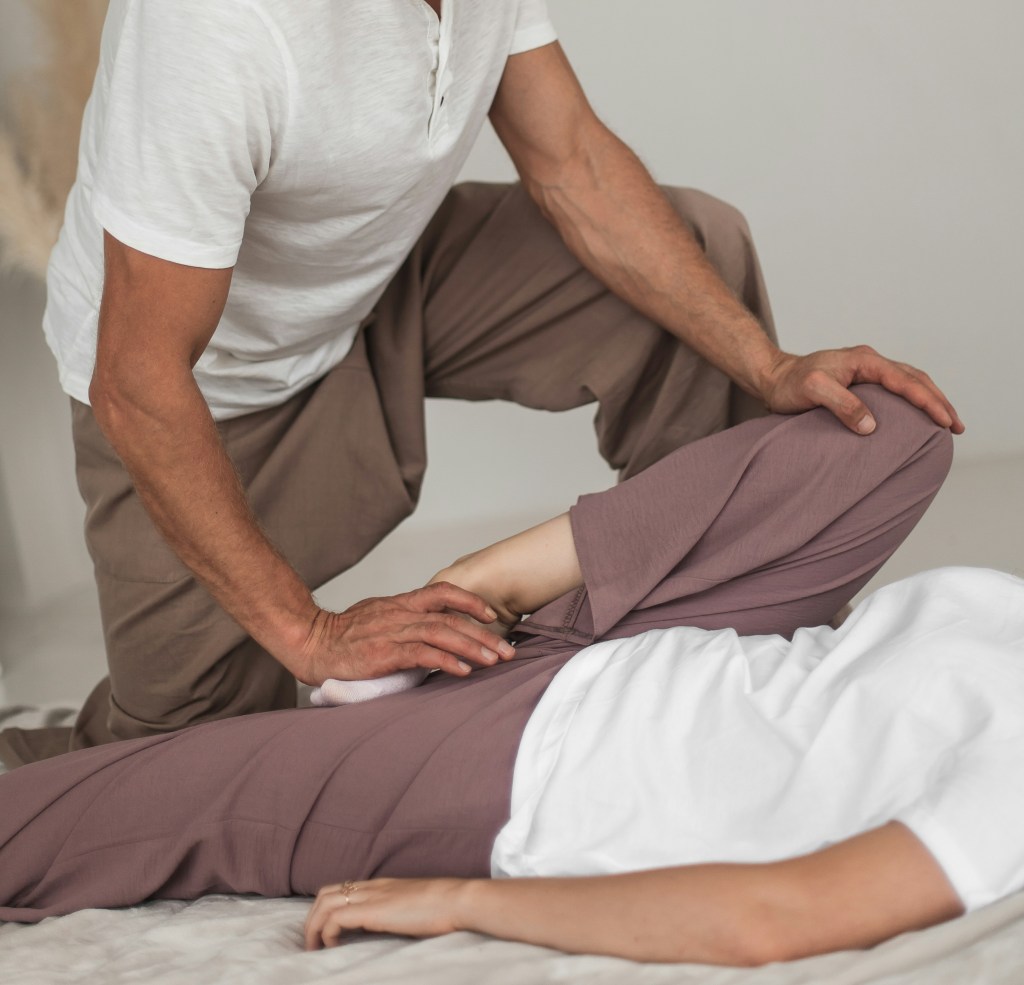
At Transcend Health and Well-Being, PNF stretching is typically used to treat clients presenting with lower back pain in combination with a limited range of motion in the muscles and connective tissue in the following areas: 
  • Hips
  • Glutes
  • Hamstrings
  • Quads
  • ITB (iliotibial band)

PNF stretching is especially helpful when lower back issues stem from tight hip and leg muscles. Incorporating PNF stretching into treatment for clients with these presentations helps to relieve tight muscles and increase range of motion, increasing the benefits of remedial massage treatment. 

How is PNF stretching integrated into sessions?

At Transcend Health and Well-Being, PNF stretching is often used as part of a broader remedial massage treatment. A typical remedial massage session involving PNF stretching may consist of:

  • Optional 30 minutes of infrared sauna to soften the muscles and connective tissue.
  • 30 minutes of massage to target the affected areas.
  • 30 minutes of PNF stretching to further relax muscles and fascia and increase range of motion. 

PNF stretching is a gradual process, and for most clients, we typically start with 4 sessions in one month and then reassess for ongoing maintenance needs. Once an initial treatment run is completed, many clients transition to once-a-month sessions for maintenance. 

Our PNF Stretching Technique
The stretching we use in our clinic is mild and never forced. We focus on facilitating the stretch, not pushing boundaries—we’re not here to turn you into the next world-renowned contortionist.  We will always work with you and your body

We often incorporate breathing into a PNF stretching session to promote relaxation and help deepen the stretch without pain or resistance. We encourage to you relax and trust your body in this process. Our goal is to facilitate an atmosphere where you feel safe, calm, and receptive—creating a positive and healing treatment experience. 


Many clients leave a PNF stretching session feeling lighter and more mobile—like a weight or restriction has been lifted. While the benefits can be felt straight away, lasting results usually take time. Releasing deep muscular tightness is a gradual process, and multiple sessions are typically needed to achieve full, long-term improvements. With consistency and care, PNF stretching can be a powerful tool in restoring movement, easing tension, and supporting your overall well-being.


This article is part three in a three-part series about the therapeutic techniques we use here at Transcend Health and Well-Being to assist those with a limited range of motion. Our first article was on the benefits of infrared sauna, and our second article was about how cupping can enhance your remedial massage journey. Click on the links to learn more!
Cupping Therapy in Remedial Massage: Ancient Wisdom, Modern Relief

Once used in traditional healing practices across the globe, cupping is now recognised as a powerful tool in soft tissue therapy. By creating suction on the skin, it helps release tension, improve blood flow, and target areas of tightness—especially in the fascia, the connective tissue that supports organs, muscles, and movement. Whether you’re dealing with stiffness, restricted range of motion, or lingering muscle soreness, cupping can offer a gentle yet effective way to help your body move and feel better.

Cupping and its History

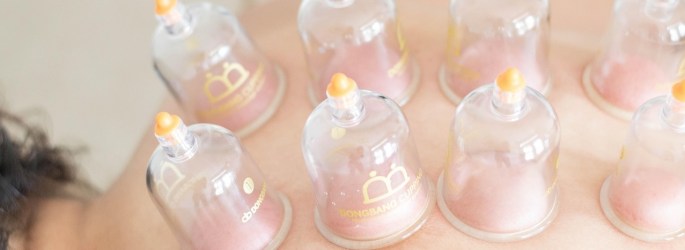
Cups used in cupping therapy.

Cupping is a form of alternative therapy that originated in China and the Middle East. It uses glass cups that are gently suctioned onto the skin along the meridians of the body, creating an effect that ‘pulls’ tissue upward, increasing blood flow and promoting muscle relaxation. 

The exact origins of cupping are unknown; however, cupping has been in use for centuries across many cultures. Ancient Greek physician Hippocrates used cupping to treat internal and structural issues, and Roman surgeons also utilised the practice. The Islamic Prophet Muhammad recommended cupping, leading Muslim scholars to develop and spread the technique throughout Asia and Europe. It also appears in historical Jewish medical texts.

In China, cupping dates to the 3rd century AD with Taoist herbalist Ge Hong. Since the 1950s, cupping has been widely used in Chinese hospitals as part of traditional medicine—highlighting its long-lasting role in healing. In recent years, cupping has been gaining popularity in the West as a helpful and healing complementary therapy for muscular issues, especially as a form of myofascial release. 

The Role of Cupping as Myofascial Release 

Myofascial release is a form of physical therapy used to relieve stiffness and address restrictions in myofascial tissue—‘fascia’. Fascia is the thin layer of connective tissues that surrounds the muscles and organs of the body. When healthy, fascia help hold the structure of your body in place and help with ease of movement. Over time, if you’re not active enough or don’t engage in a full range of movement, fascia can get accustomed to a restricted range of motion. This can result in fascia that is less flexible and prone to micro-adhesions, which in turn can restrict range of motion further. 

Cupping as a form of myofascial release can work on these micro-adhesions to help stretch fascia, increase blood flow, encourage healing, and increase range of motion. Cupping also works deep in the tissue—it creates a ‘pulling’ action that takes place about 2cm below the surface of your skin—offering a unique release when compared to massage. While massage works by gently pushing into the muscles to release tension, cupping does the opposite—it lifts the tissue upward. When used together, this push-pull combination helps target tightness from both directions. 

Cupping in Remedial Massage: What to Expect

So, when might cupping be used in addition to massage? 

Cupping is especially useful for clients with presentations involving: 

  • Tightness
  • Limited range of motion
  • Ligament injuries 

When combining cupping with remedial massage, cups will typically be applied both before and after the massage, for about 5-10 minutes at a time. When used therapeutically, cupping is often very targeted, with cups applied only to the specific areas that need attention. 

In some cases, deep red marks may occur where the cups were placed. This is a completely normal part of the cupping process and to be expected. These marks may look like bruises, but they are skin discolorations caused by blood being drawn to the surface and increased circulation. They usually fade within two weeks and can even be a good sign that the body is responding well to treatment, helping speed up fascia recovery in the area.

What does a typical cupping + remedial massage session look like?

A typical session combining cupping and remedial massage is 90 minutes long—with 5-10 mins of cupping either side of the remedial massage. Incorporating cupping as part of a remedial massage allows your massage therapist to maximise its benefits—helping to soften tight tissue, improve circulation, and release fascial restrictions. 

Cupping can also be combined with infrared sauna for increased benefits; however, since sauna isn’t for everyone, cupping can be a great alternative for relaxing tight muscles without the heat. It allows your massage therapist to tailor the treatment to what you’re most comfortable with—making cupping a suitable choice when the issue isn’t too severe or when heat therapy isn’t preferred.


To summarise, cupping is an invaluable tool in soft tissue therapy—helping to relax and stretch fascia—increasing range of motion and promoting healing. Its benefits in remedial massage are vast, from treating limited range of motion to addressing broader issues like general muscle tightness. Results are fairly immediate, with many clients reporting instant improvements in range of motion. If you’re curious or dealing with restricted movement or muscle tightness, talk to us about cupping. It might just give you the release you’ve been looking for.


This article is part two in a three-part series about the therapeutic techniques we use here at Transcend Health and Well-Being to assist those with a limited range of motion. Our first article was about the benefits of infrared sauna. Be sure to keep tabs on our posts to read part three!

The Benefits of Infrared Sauna in Massage Therapy 


Infrared saunas have been gaining popularity in holistic health circles lately—and for good reason. They offer a gentle, supportive way to help the body relax, recover, and release tension. If you’ve ever had a massage and felt like your muscles just wouldn’t let go—no matter how much pressure was applied—infrared sauna might be the missing piece. Infrared heat helps soften the muscles from the inside out, setting the stage for a deeper, more effective massage without the discomfort. If you come for a remedial massage at Transcend Health and Well-Being, we may recommend infrared sauna as part of your treatment plan. Why? Find out below!

But firstly, what is infrared sauna therapy? 

Infrared light belongs to the electromagnetic spectrum and, although invisible to the eye, is experienced by the body as heat. Unlike traditional saunas that rely on hot rocks and steam to generate warmth, infrared saunas use infrared light to produce heat, heating up your body sub-dermally about 1cm under the skin. This method allows the surrounding air to remain cooler while enabling the heat to penetrate more deeply into the skin, tissues, and muscles—making infrared saunas more effective than their traditional counterparts. This sub-dermal heat stimulates your nerves, blood flow and lymph flow, which can in turn relax your muscles

So, why use infrared sauna before a massage?

Infrared sauna is one of the many tools Transcend Health and Well-Being uses to support clients who may need a little extra therapeutic help.

Your massage therapist may recommend a pre-massage infrared sauna session for clients with:

  • Tight muscles
  • Limited range of motion
  • Chronic tension or stiffness

Spending 30 minutes in an infrared sauna before a massage session can soften the muscle tissue, allowing for deeper muscle work during treatment without excessive pressure and the related discomfort. Infrared sauna can also help ease overall soreness during massage and improve outcomes, especially if previous massages have not been effective in providing relief due to muscle tension.

How is infrared sauna integrated into treatment? 

Transcend Health and Well-Being will only recommend pre-massage infrared sauna as part of your treatment plan following an initial consultation. If pre-massage infrared sauna is recommended, your infrared sauna session will be included in the standard 90-minute remedial massage session rate. Remedial massage sessions including infrared sauna are 90 minutes long as standard: 30 minutes for infrared sauna, and 60 minutes for remedial massage— this duration ensures you’ll receive the full benefits of the infrared sauna while allowing your massage therapist sufficient time to complete their remedial massage work, ensuring you leave your treatment one step closer to recovery.

Of course, infrared sauna is beneficial for everyone, especially post-massage. For clients who do not require pre-massage infrared sauna, we still recommend a post-massage infrared sauna session. Post-massage infrared sauna can reinforce the effects of a massage by encouraging deeper muscle relaxation—many clients report that it’s the perfect way to wind down after a massage and leaves them feeling deeply relaxed.


Whether used before or after your session, infrared sauna amplifies the benefits of massage—but when used beforehand, it can be especially powerful. For those dealing with chronic tightness or stiffness, it offers a gentler, more effective path to deep tissue relief—helping the body let go without the need for intense pressure, and sometimes that makes all the difference!


This article is part one in a three-part series about the therapeutic techniques we use here at Transcend Health and Well-Being to assist those with a limited range of motion. Check out part two about cupping here. Be sure to keep tabs on our posts to find out more!