
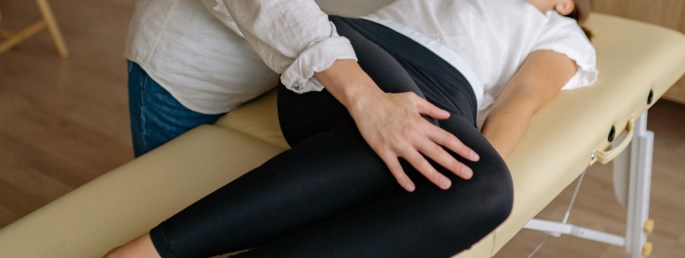
If you’ve ever felt restricted by tight muscles, reduced flexibility, or lingering tension—especially in your hips or lower back—PNF stretching might be the missing link in your recovery and mobility journey. At Transcend Health and Well-Being, we use this advanced stretching technique to support deeper muscular release, improved range of motion, and long-lasting results when combined with remedial massage. Commonly used by physical therapists and athletes, it’s a valuable tool in treating pain, improving flexibility, and supporting injury recovery.
What is PNF Stretching?
PNF stretching, short for Proprioceptive Neuromuscular Facilitation, is a stretching technique that improves flexibility by combining gentle stretching with muscle activation. It involves alternating between holding a stretch and contracting the muscle, which helps the body relax and lengthen the targeted muscle.
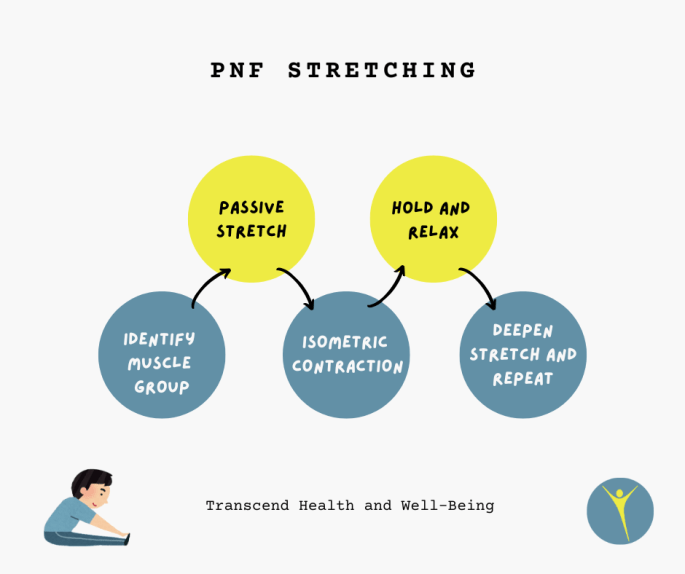
A PNF stretching session will typically begin with a passive stretch of the targeted muscle, gently stretching the muscle to its maximum ability. This passive stretch will be followed by an isometric contraction—the muscle will remain in its passive stretch and be contracted against resistance. The muscle is then relaxed again, and the stretch is deepened. This process is typically repeated multiple times for maximum effect.
Why use PNF stretching in remedial massage?
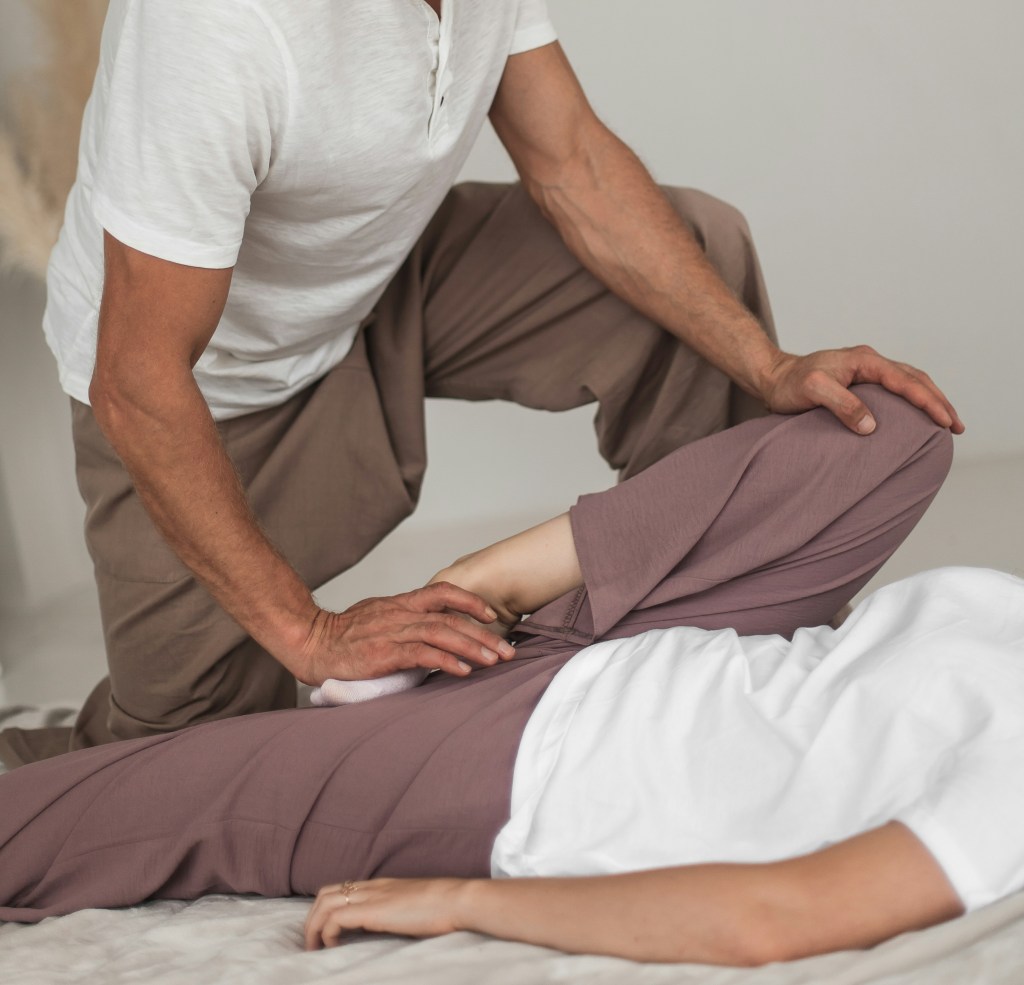
At Transcend Health and Well-Being, PNF stretching is typically used to treat clients presenting with lower back pain in combination with a limited range of motion in the muscles and connective tissue in the following areas:
- Hips
- Glutes
- Hamstrings
- Quads
- ITB (iliotibial band)
PNF stretching is especially helpful when lower back issues stem from tight hip and leg muscles. Incorporating PNF stretching into treatment for clients with these presentations helps to relieve tight muscles and increase range of motion, increasing the benefits of remedial massage treatment.
How is PNF stretching integrated into sessions?
At Transcend Health and Well-Being, PNF stretching is often used as part of a broader remedial massage treatment. A typical remedial massage session involving PNF stretching may consist of:
- Optional 30 minutes of infrared sauna to soften the muscles and connective tissue.
- 30 minutes of massage to target the affected areas.
- 30 minutes of PNF stretching to further relax muscles and fascia and increase range of motion.
PNF stretching is a gradual process, and for most clients, we typically start with 4 sessions in one month and then reassess for ongoing maintenance needs. Once an initial treatment run is completed, many clients transition to once-a-month sessions for maintenance.
Our PNF Stretching Technique
The stretching we use in our clinic is mild and never forced. We focus on facilitating the stretch, not pushing boundaries—we’re not here to turn you into the next world-renowned contortionist. We will always work with you and your body.
We often incorporate breathing into a PNF stretching session to promote relaxation and help deepen the stretch without pain or resistance. We encourage to you relax and trust your body in this process. Our goal is to facilitate an atmosphere where you feel safe, calm, and receptive—creating a positive and healing treatment experience.
Many clients leave a PNF stretching session feeling lighter and more mobile—like a weight or restriction has been lifted. While the benefits can be felt straight away, lasting results usually take time. Releasing deep muscular tightness is a gradual process, and multiple sessions are typically needed to achieve full, long-term improvements. With consistency and care, PNF stretching can be a powerful tool in restoring movement, easing tension, and supporting your overall well-being.
This article is part three in a three-part series about the therapeutic techniques we use here at Transcend Health and Well-Being to assist those with a limited range of motion. Our first article was on the benefits of infrared sauna, and our second article was about how cupping can enhance your remedial massage journey. Click on the links to learn more!
 transcendhealthwellbeing.com.au