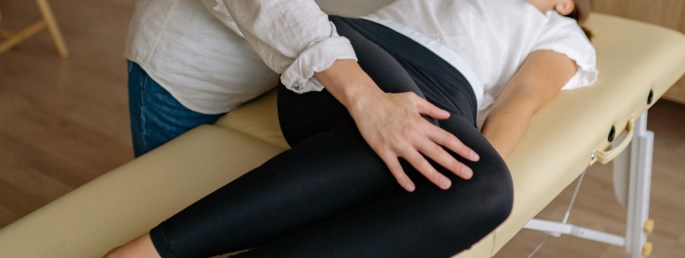
PNF Stretching in Remedial Massage: An Advanced Stretching Technique with Therapeutic Benefits 

If you’ve ever felt restricted by tight muscles, reduced flexibility, or lingering tension—especially in your hips or lower back—PNF stretching might be the missing link in your recovery and mobility journey. At Transcend Health and Well-Being, we use this advanced stretching technique to support deeper muscular release, improved range of motion, and long-lasting results when combined with remedial massage. Commonly used by physical therapists and athletes, it’s a valuable tool in treating pain, improving flexibility, and supporting injury recovery.

What is PNF Stretching?

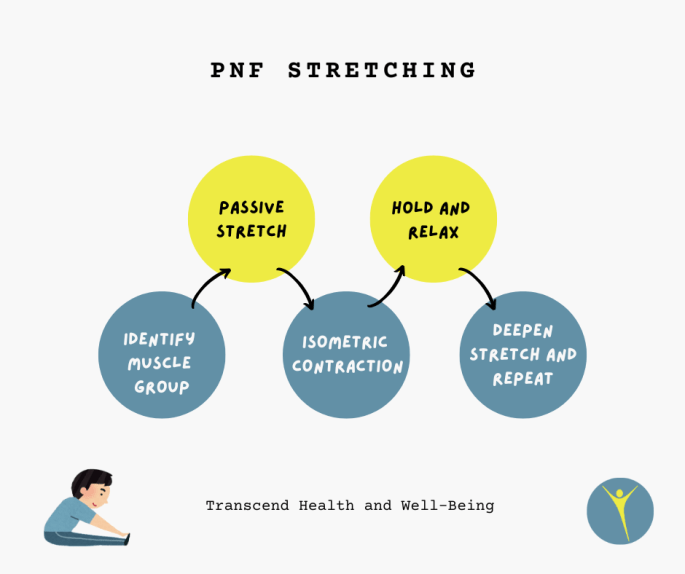
PNF stretching, short for Proprioceptive Neuromuscular Facilitation, is a stretching technique that improves flexibility by combining gentle stretching with muscle activation. It involves alternating between holding a stretch and contracting the muscle, which helps the body relax and lengthen the targeted muscle.

A PNF stretching session will typically begin with a passive stretch of the targeted muscle, gently stretching the muscle to its maximum ability. This passive stretch will be followed by an isometric contraction—the muscle will remain in its passive stretch and be contracted against resistance. The muscle is then relaxed again, and the stretch is deepened. This process is typically repeated multiple times for maximum effect. 

Why use PNF stretching in remedial massage?

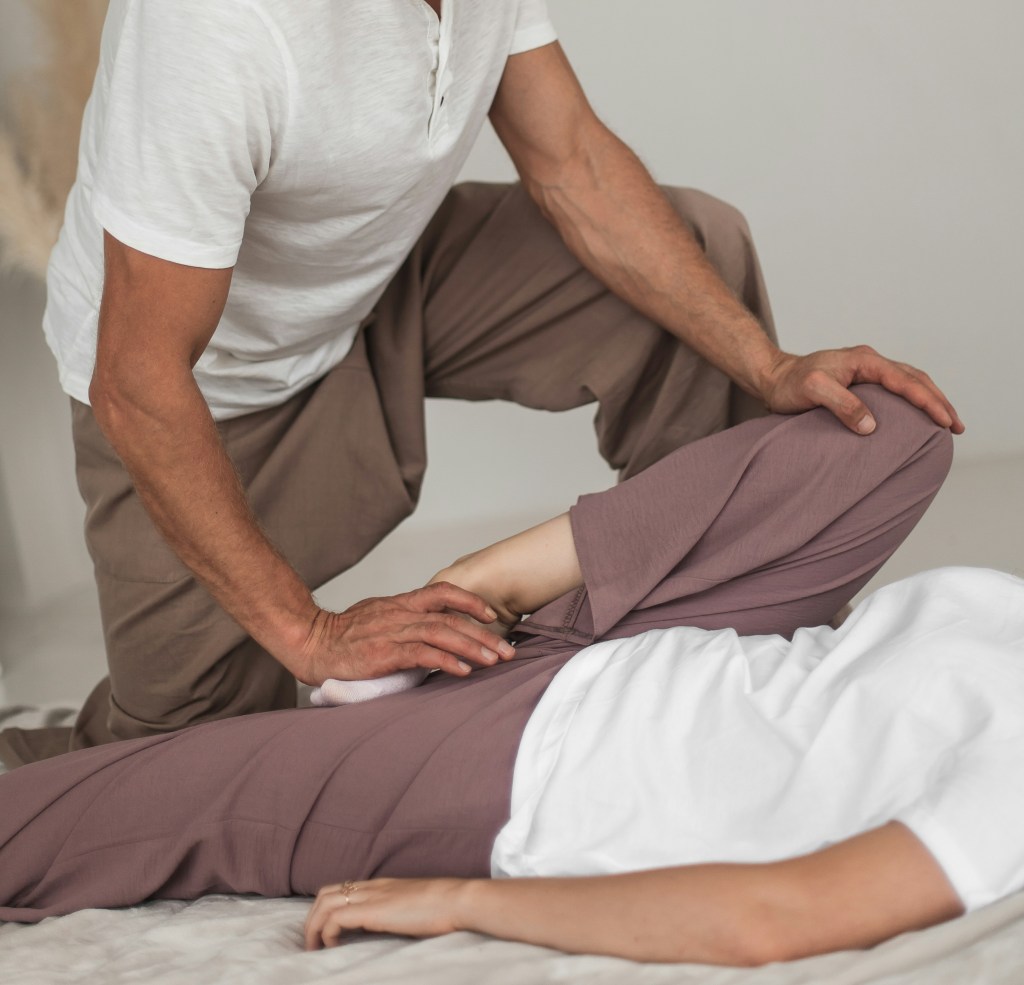
At Transcend Health and Well-Being, PNF stretching is typically used to treat clients presenting with lower back pain in combination with a limited range of motion in the muscles and connective tissue in the following areas: 
  • Hips
  • Glutes
  • Hamstrings
  • Quads
  • ITB (iliotibial band)

PNF stretching is especially helpful when lower back issues stem from tight hip and leg muscles. Incorporating PNF stretching into treatment for clients with these presentations helps to relieve tight muscles and increase range of motion, increasing the benefits of remedial massage treatment. 

How is PNF stretching integrated into sessions?

At Transcend Health and Well-Being, PNF stretching is often used as part of a broader remedial massage treatment. A typical remedial massage session involving PNF stretching may consist of:

  • Optional 30 minutes of infrared sauna to soften the muscles and connective tissue.
  • 30 minutes of massage to target the affected areas.
  • 30 minutes of PNF stretching to further relax muscles and fascia and increase range of motion. 

PNF stretching is a gradual process, and for most clients, we typically start with 4 sessions in one month and then reassess for ongoing maintenance needs. Once an initial treatment run is completed, many clients transition to once-a-month sessions for maintenance. 

Our PNF Stretching Technique
The stretching we use in our clinic is mild and never forced. We focus on facilitating the stretch, not pushing boundaries—we’re not here to turn you into the next world-renowned contortionist.  We will always work with you and your body

We often incorporate breathing into a PNF stretching session to promote relaxation and help deepen the stretch without pain or resistance. We encourage to you relax and trust your body in this process. Our goal is to facilitate an atmosphere where you feel safe, calm, and receptive—creating a positive and healing treatment experience. 


Many clients leave a PNF stretching session feeling lighter and more mobile—like a weight or restriction has been lifted. While the benefits can be felt straight away, lasting results usually take time. Releasing deep muscular tightness is a gradual process, and multiple sessions are typically needed to achieve full, long-term improvements. With consistency and care, PNF stretching can be a powerful tool in restoring movement, easing tension, and supporting your overall well-being.


This article is part three in a three-part series about the therapeutic techniques we use here at Transcend Health and Well-Being to assist those with a limited range of motion. Our first article was on the benefits of infrared sauna, and our second article was about how cupping can enhance your remedial massage journey. Click on the links to learn more!

Cupping Therapy in Remedial Massage: Ancient Wisdom, Modern Relief

Once used in traditional healing practices across the globe, cupping is now recognised as a powerful tool in soft tissue therapy. By creating suction on the skin, it helps release tension, improve blood flow, and target areas of tightness—especially in the fascia, the connective tissue that supports organs, muscles, and movement. Whether you’re dealing with stiffness, restricted range of motion, or lingering muscle soreness, cupping can offer a gentle yet effective way to help your body move and feel better.

Cupping and its History

Cups used in cupping therapy.

Cupping is a form of alternative therapy that originated in China and the Middle East. It uses glass cups that are gently suctioned onto the skin along the meridians of the body, creating an effect that ‘pulls’ tissue upward, increasing blood flow and promoting muscle relaxation. 

The exact origins of cupping are unknown; however, cupping has been in use for centuries across many cultures. Ancient Greek physician Hippocrates used cupping to treat internal and structural issues, and Roman surgeons also utilised the practice. The Islamic Prophet Muhammad recommended cupping, leading Muslim scholars to develop and spread the technique throughout Asia and Europe. It also appears in historical Jewish medical texts.

In China, cupping dates to the 3rd century AD with Taoist herbalist Ge Hong. Since the 1950s, cupping has been widely used in Chinese hospitals as part of traditional medicine—highlighting its long-lasting role in healing. In recent years, cupping has been gaining popularity in the West as a helpful and healing complementary therapy for muscular issues, especially as a form of myofascial release. 

The Role of Cupping as Myofascial Release 

Myofascial release is a form of physical therapy used to relieve stiffness and address restrictions in myofascial tissue—‘fascia’. Fascia is the thin layer of connective tissues that surrounds the muscles and organs of the body. When healthy, fascia help hold the structure of your body in place and help with ease of movement. Over time, if you’re not active enough or don’t engage in a full range of movement, fascia can get accustomed to a restricted range of motion. This can result in fascia that is less flexible and prone to micro-adhesions, which in turn can restrict range of motion further. 

Cupping as a form of myofascial release can work on these micro-adhesions to help stretch fascia, increase blood flow, encourage healing, and increase range of motion. Cupping also works deep in the tissue—it creates a ‘pulling’ action that takes place about 2cm below the surface of your skin—offering a unique release when compared to massage. While massage works by gently pushing into the muscles to release tension, cupping does the opposite—it lifts the tissue upward. When used together, this push-pull combination helps target tightness from both directions. 

Cupping in Remedial Massage: What to Expect

So, when might cupping be used in addition to massage? 

Cupping is especially useful for clients with presentations involving: 

  • Tightness
  • Limited range of motion
  • Ligament injuries 

When combining cupping with remedial massage, cups will typically be applied both before and after the massage, for about 5-10 minutes at a time. When used therapeutically, cupping is often very targeted, with cups applied only to the specific areas that need attention. 

In some cases, deep red marks may occur where the cups were placed. This is a completely normal part of the cupping process and to be expected. These marks may look like bruises, but they are skin discolorations caused by blood being drawn to the surface and increased circulation. They usually fade within two weeks and can even be a good sign that the body is responding well to treatment, helping speed up fascia recovery in the area.

What does a typical cupping + remedial massage session look like?

A typical session combining cupping and remedial massage is 90 minutes long—with 5-10 mins of cupping either side of the remedial massage. Incorporating cupping as part of a remedial massage allows your massage therapist to maximise its benefits—helping to soften tight tissue, improve circulation, and release fascial restrictions. 

Cupping can also be combined with infrared sauna for increased benefits; however, since sauna isn’t for everyone, cupping can be a great alternative for relaxing tight muscles without the heat. It allows your massage therapist to tailor the treatment to what you’re most comfortable with—making cupping a suitable choice when the issue isn’t too severe or when heat therapy isn’t preferred.


To summarise, cupping is an invaluable tool in soft tissue therapy—helping to relax and stretch fascia—increasing range of motion and promoting healing. Its benefits in remedial massage are vast, from treating limited range of motion to addressing broader issues like general muscle tightness. Results are fairly immediate, with many clients reporting instant improvements in range of motion. If you’re curious or dealing with restricted movement or muscle tightness, talk to us about cupping. It might just give you the release you’ve been looking for.


This article is part two in a three-part series about the therapeutic techniques we use here at Transcend Health and Well-Being to assist those with a limited range of motion. Our first article was about the benefits of infrared sauna. Be sure to keep tabs on our posts to read part three!

The Benefits of Infrared Sauna in Massage Therapy 


Infrared saunas have been gaining popularity in holistic health circles lately—and for good reason. They offer a gentle, supportive way to help the body relax, recover, and release tension. If you’ve ever had a massage and felt like your muscles just wouldn’t let go—no matter how much pressure was applied—infrared sauna might be the missing piece. Infrared heat helps soften the muscles from the inside out, setting the stage for a deeper, more effective massage without the discomfort. If you come for a remedial massage at Transcend Health and Well-Being, we may recommend infrared sauna as part of your treatment plan. Why? Find out below!

But firstly, what is infrared sauna therapy? 

Infrared light belongs to the electromagnetic spectrum and, although invisible to the eye, is experienced by the body as heat. Unlike traditional saunas that rely on hot rocks and steam to generate warmth, infrared saunas use infrared light to produce heat, heating up your body sub-dermally about 1cm under the skin. This method allows the surrounding air to remain cooler while enabling the heat to penetrate more deeply into the skin, tissues, and muscles—making infrared saunas more effective than their traditional counterparts. This sub-dermal heat stimulates your nerves, blood flow and lymph flow, which can in turn relax your muscles

So, why use infrared sauna before a massage?

Infrared sauna is one of the many tools Transcend Health and Well-Being uses to support clients who may need a little extra therapeutic help.

Your massage therapist may recommend a pre-massage infrared sauna session for clients with:

  • Tight muscles
  • Limited range of motion
  • Chronic tension or stiffness

Spending 30 minutes in an infrared sauna before a massage session can soften the muscle tissue, allowing for deeper muscle work during treatment without excessive pressure and the related discomfort. Infrared sauna can also help ease overall soreness during massage and improve outcomes, especially if previous massages have not been effective in providing relief due to muscle tension.

How is infrared sauna integrated into treatment? 

Transcend Health and Well-Being will only recommend pre-massage infrared sauna as part of your treatment plan following an initial consultation. If pre-massage infrared sauna is recommended, your infrared sauna session will be included in the standard 90-minute remedial massage session rate. Remedial massage sessions including infrared sauna are 90 minutes long as standard: 30 minutes for infrared sauna, and 60 minutes for remedial massage— this duration ensures you’ll receive the full benefits of the infrared sauna while allowing your massage therapist sufficient time to complete their remedial massage work, ensuring you leave your treatment one step closer to recovery.

Of course, infrared sauna is beneficial for everyone, especially post-massage. For clients who do not require pre-massage infrared sauna, we still recommend a post-massage infrared sauna session. Post-massage infrared sauna can reinforce the effects of a massage by encouraging deeper muscle relaxation—many clients report that it’s the perfect way to wind down after a massage and leaves them feeling deeply relaxed.


Whether used before or after your session, infrared sauna amplifies the benefits of massage—but when used beforehand, it can be especially powerful. For those dealing with chronic tightness or stiffness, it offers a gentler, more effective path to deep tissue relief—helping the body let go without the need for intense pressure, and sometimes that makes all the difference!


This article is part one in a three-part series about the therapeutic techniques we use here at Transcend Health and Well-Being to assist those with a limited range of motion. Check out part two about cupping here. Be sure to keep tabs on our posts to find out more!

How Our Values are Reflected in Our Pricing Structure 

Out of all the positive comments that we have received from clients over the years, one of the most common is just how affordable our services are. 

(The other, if you’re wondering, is our expertise and the effectiveness of our treatments—affordable doesn’t mean low quality and our clients will attest to that.)

But, as many may so understandably wonder, why would a professional remedial massage therapist deliberately choose to keep their prices below market rate?

The answer lies in our values—affordable, professional, and community-based. 

When George formed Transcend Health and Well-Being in 2018, he realised that he was in the unique position of being able to create a values-based business, so he endeavoured to establish an affordable, community-based remedial massage therapy practice that would be accessible to all in the local community while providing top quality care and expertise. Our pricing structure aims to reflect these values and our desire to operate a massage therapy practice with people at the centre of its purpose. We believe that our prices reflect these values in multiple ways: 

  • We believe massage therapy should be accessible to all. 

The desire to help others heal and achieve optimum health was the driving force behind George’s career change from Dental Technician to Remedial Massage Therapist. Just as doctors are important for overall health and dentists are important to dental health, we believe remedial massage is important to the health of muscles, tendons and overall mobility and function. Yet, remedial massage is not covered by Medicare, despite its importance. This causes many people to—understandably—ignore or put off treatment for muscular issues, leading to widespread pain, lethargy, headaches, reduced mobility and plethora of other health issues. We do not believe muscular injuries are of any less importance than other health-impacting injuries and illnesses, and it is our hope that by keeping prices affordable, more people are able to access professional remediation and treatment. 

  • Many issues necessitating remedial massage therapy require multiple sessions to treat.

Many of the injuries we see in our practice require multiple or regular treatment sessions to effectively address the problem and/or keep the problem at bay. This is especially true of issues related to stress or chronic health issues. We offer a reduced price for those requiring ongoing or repeated treatment to lessen financial impact and encourage others on their journey to good health. We simply do not believe that people should suffer financially in order to achieve good health. 

  • We are passionate about the health benefits of remedial massage, relaxation massage and complimentary therapies. 

Our services go beyond remedial massage. We also offer relaxation massage, cupping, reiki, reflexology and infrared sauna. Our affordable pricing structure extends to these complimentary therapies as we believe their benefits can lead to positive health outcomes in people’s busy, face-paced lives. 

  • We are a valued-led business dedicated to professionalism.

George is a trained remedial massage therapist, certified and endorsed by Massage and Myotherapy Australia. We may choose to keep our prices affordable, but this does not impact the quality and professionalism of our work. We are dedicated to the practice of remedial massage and incredibly passionate about the positive impact quality remedial massage and related therapies can have on health and wellbeing. Our dedication to the profession of remedial massage therapy and person-centred practice extends to our commitment to professional standards. 

George is incredibly passionate about helping people achieve the highest level of health and wellbeing available to them. Our passion for people and the benefits of remedial massage and related therapies is what drove us to establish a reasonably priced massage therapy practice, and it’s what drives us to remain reasonably priced to this day. 

We hope this post has answered your questions regarding our pricing structure. If you have any more, feel free to message us, and we’re looking forward to helping you achieve your true potential. 

Transcend Health and Well-Being now has Certified Specialist Accreditation!

Exciting news! Transcend Health and Well-Being recently achieved Certified Specialist accreditation with Massage and Myotherapy Australia —the peak body representing massage therapists in Australia. This gives our clients additional reassurance that when they book a treatment with our practice, they are choosing an accredited health provider of choice. Learn more about what this means for you and our practice below!

What is accreditation? 

Accreditation is a 3-stage professional development framework for consistent and reliable national best practice standard and quality assurance for the Australian massage and myotherapy industry, supported by the Australian Government. An initiative pioneered by Massage and Myotherapy Australia, accreditation is an additional avenue a practicing massage therapist may pursue following the completion of all necessary qualifications. Accreditation for massage and myotherapy is relatively new in Australia; however, most health professions in Australia do require registration and accreditation with a national body in order to practice— accreditation confirms a health practitioner’s dedication to professional development and their commitment to the accepted standards, ethics and practices of the field. It is our hope that accreditation will help to foster an industry standard across the massage and myotherapy industry in Australia, ensuring all Australians have access to a qualified, accredited massage therapist and a safe, professional, and positive massage therapy experience.

The Australian Government recognises the important role played by professional bodies, such as Massage & Myotherapy Australia, in providing guidance and support to their practitioners. It is vital that professional bodies provide leadership that fosters high standards of ethical practice and conduct for their members. This provides the community and governments with confidence that there is transparency and accountability within professions and, most importantly, that public safety is a paramount consideration.’ 

Hon. Greg Hunt, former Minister for Health.
Quoted from Massage and Myotherapy Australia—Certification: Evolving Professional Therapists

What is involved? 

Certification involves 3 stages: 

  • Application: During the first stage, certified assessors complete police checks, first aid checksABN checks and assess qualifications and professional memberships, ensuring a practitioners training is up to date and of the standard required by the organisation. A massage practitioner must pass all the above checks to progress to the next stage.
  • Self-Assessment: Stage 2 involves providing evidence of certificatesbusiness plans, and practice policies including hygiene and privacy, encouraging the practitioner to reflect on the purpose of their practice and their dedication to industry standards.  
  • Site Assessment: Once assessors are satisfied that the massage practitioner has all relevant business policies in place and is operating according to industry guidelines, a site support visit is scheduled (stage 3). This includes an in-person site assessment of the clinic, in which assessors will visit the applicant’s clinic to ensure safety and ethics policies are adhered to and that the clinic site is of a standard expected of practitioners associated with the organisation.
What does it mean for you?

By seeking Certified Specialist accreditation Transcend Health and Well-Being can assure you, the client, that we are operating to the highest standards expected in the industry. By choosing our clinic, you are choosing a qualified, experienced, and professional health provider, dedicated to upholding the ethical and professional standards set by Massage and Myotherapy Australia. Although it has been our aim to operate according to these standards from the inception of our practice, we hope that by gaining Certified Specialist accreditation, we are giving our clients peace of mind that when they book with Transcend Health and Well-Being, they are choosing an industry-endorsed practice.

Want to learn more? Click here!

What to Look for in a Massage Therapist

So, you need to see a massage therapist. Whether you’ve been told to seek massage therapy by a doctor, dentist, chiropractor, or personal trainer, or you’ve realised you need to see one yourself, it can be hard to discern quality therapeutic massage care in the sea of massage therapy options available. 

We know because we’ve been there! Like regular dental checks, regular massage therapy sessions can be beneficial for the prevention of injury and promotion of general health and wellbeing, and even massage therapists need a massage therapist (after all, they can’t treat themselves). 

Here’s a list of the qualities we look for in a massage therapist: 

  1. Qualifications!

You wouldn’t want an unqualified surgeon performing surgery on you. Likewise, you don’t want an unqualified massage therapist working on your muscles and tendons. Remedial massage is a professional qualification and requires years of study and supervision and ongoing professional development. Working with an unqualified massage therapist can be a health risk, so even if you are only after a relaxation massage, finding a practitioner qualified in remedial massage will ensure your therapist is aware of the location of sensitive muscles and tendons in the body and their therapeutic applications. Confirming that your practitioner is a professional member of a massage association—for example, Massage and Myotherapy Australia—will give you peace of mind, as all therapists registered with Massage and Myotherapy Australia must comply with professional and ethical standards.

  1. A clean and safe work environment. 

Going for a massage can be a vulnerable experience—many of us aren’t used to having strangers work on our bare skin. A qualified practitioner will be aware of the safety concerns of clients and of industry safety standards. Check your practitioners’ policies and procedures for draping (covering body parts that aren’t being worked on) and client privacy, consent, and rights. A good remedial massage therapist will be passionate about client safety and wellbeing as an integral part of their practice. 

Along the same lines, cleanliness is incredibly important in all therapeutic environments. A reputable massage therapist will follow all industry-standard practices regarding cleanliness and infection control, including—but not limited to—ensuring the massage environment is clean and free of clutter, cleaning and disinfecting the massage bed between clients, ensuring all towels are single-use, and the prevention of cross-contamination when using multiple-use products such as lotions and creams.

  1. A Collaborative Approach. 

Massage therapy can be a highly personalised practice—what works for one person, may not work for another, and we all have different pain thresholds, pressure tolerance and temperature preferences. A good massage therapist will be open and honest with communication from the beginning, ensuring you understand and consent to treatment and listening to your preferences and adjusting accordingly. They will also check in regularly before, during, and after your treatment to ensure your massage is a comfortable, positive, and healing experience. 

  1. A Good Range of Treatments Available.

Your relationship with your massage therapist will hopefully span a lifetime. Ensuring that your massage therapist of choice offers a range of therapies to suit your present and future health needs will ensure options and continuity of care. At Transcend Health and Well-Being, we offer remedial massage, dental/TMJ massage, relaxation and aromatherapy massage, children’s massage, cupping, reflexology, reiki, meditation, and infrared sauna to suit the needs of you and your family—whether you need a remedial massage for the management of an injury or an aromatherapy relaxation massage to destress during a stressful period at work. We can even tailor your treatment plan to address certain health conditions.

Here is what Taviene Kessler, remedial massage therapist who owns and operates Healing Hands Wellbeing Centre has to say about our work: 

‘As a fellow Remedial Massage Therapist, we are of course exceptionally picky about which Remedial Massage Therapists we ourselves go to! George ticks all the boxes from a therapist point of view—he is an exceptional therapist, very knowledgeable, really takes the time to listen to his client, and very thorough in his assessment and treatment! Thanks for the gold-star treatment George!’

Taviene is George’s personal Remedial Massage Therapist and a Transcend Health and Well-Being client.

Transcend Health and Well-being is incredibly passionate about the health benefits of quality massage therapy. Attributes such as remedial qualifications and certification, cleanliness, client safety and wellbeing, and breadth of treatment options are the assets we look for in our own personal massage therapists, and qualities we will always uphold in our own practice, so you know that you are getting the very best of care.

The Benefits of Massage and Exercise + Our Partnership with Jetts Baringa

Did you know that members of Jetts Baringa receive a 20% discount on all our services? And, our agreement with Jetts Baringa goes both ways—clients of Transcend Health and Wellbeing can enjoy a $0 Joining Fee + 2 weeks free & 2 free Personal Training sessions upon signing up.

There are many benefits of massage and exercise combined. Read below to see the reasons why we’ve partnered with Jetts to bring you discounted services.

Massage is good for you pre-workout!

A gentle massage before visiting the gym can help warm up your muscles and increase flexibility, plus relieve stress to help you focus on your workout. Generally, massages given pre-workout are gentle so as not to leave you sore. The idea is to help you limber up, but not so much that muscles are overly loose.

Massage is good for you post-workout!

We all know that feeling of being sore the day after a workout. Delayed Onset Muscle Soreness (DOMS) usually occurs within 48 hours after an intense workout and can leave you stiff and sore. A post-workout massage can help relieve pain and stiffness, release tension, improve flexibility and blood circulation, and help remove lactic acid from your muscles. Infrared sauna is also fantastic post-workout, helping to reduce tension, release toxins and speed up the healing process.

Massage can be beneficial both pre and post-workout!

Remedial massage can be beneficial for exercise-induced injuries!

We try and look after our bodies as best we can—warming up, cooling down, and wrapping our joints, but injuries can still happen, whether through overuse, repetitive strain or by accident. If an exercise-induced injury occurs, remedial massage can be beneficial through the systematic assessment and treatment of the muscles, tendons, ligaments, and connective tissues of the body to assist in rehabilitation.

Joining the gym can be beneficial for our remedial massage clients!

Okay, so you probably don’t need yet another health professional telling you to work out, but hear us out. Many of our clients experience stiffness, pain and injury due to underuse—that is, weak muscles. Strength training can help your muscles support your frame, increase muscle flexibility, and increase bone strength, leading to less injuries overall. Exercise ‘homework’ is usually included in most of our rehabilitation plans to help stabilise and treat injuries and muscular conditions.

Looking after yourself is important …

And we don’t mean ‘keeping trim’ or going paleo (unless that is what genuinely brings you fulfilment). We live in a busy and fast-paced world, and many of us don’t have time to take a bath, let alone meditate for an hour. But, taking care of ourselves is important! You’ve probably heard the phrase, ‘put your own oxygen mask on first before helping others’—looking after ourselves first can pay off in the long run. Until recently, health advice has been so focused on the physical aspects of wellness, that we have forgotten to care of our mind and spirit. Both massage and exercise can increase endorphins, increase blood circulation and reduce stress, so doing things like getting a massage, having a sauna, or engaging in an enjoyable form of exercise can go a long way to help ‘fill our cup’ and ensure we lead balanced and fulfilled lives.


Check out Jetts Baringa on Facebook, or click here to book your massage treatment at Transcend Health and Well-Being.